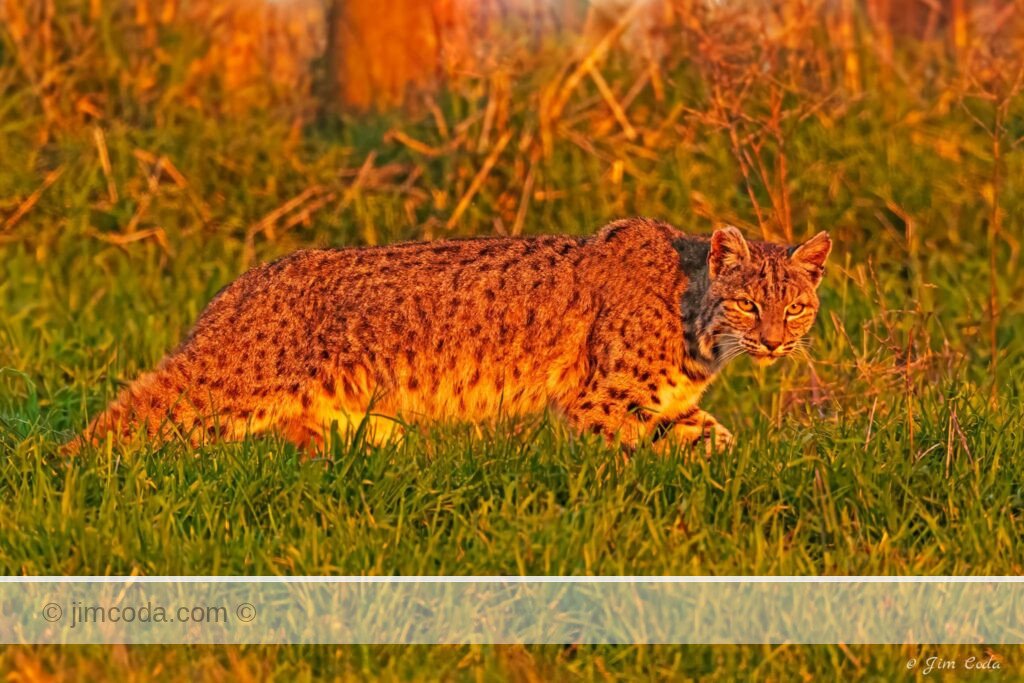
The sun is setting and I want a bobcat or some other attractive wild creature in my viewfinder. But as the Rolling Stones say: “You can’t always get what you want.” While many wildlife species become active around that time, getting one in the viewfinder involves some skill and luck. Plus, there is the added problem that not every sunset period involves nice golden light. Some days are overcast. And at Point Reyes Seashore, there’s the chance fog may roll in.
Assuming you have a sunny afternoon, you have about an hour before the sun sets when the light goes from slightly golden to intensely golden. There can be equally good light during the sunrise hour, but for me getting out to the Seashore in the afternoon is a lot easier.
I was very fortunate to get this bobcat in my viewfinder just as the sun was setting a few days ago. It was walking along a woven wire fence line, and I was hoping it would look my way. Fortunately, it did for just a second. Of course, shooting at this time of day requires higher ISO settings. Fortunately, with the denoise programs available today, that is much less of a problem than it used to be.
We are at a turning point at Point Reyes National Seashore. The ranchers will be gone on or before April 7 under the settlement that ended a few years of litigation and decades of mismanagement by ranchers and the National Park Service. This year will involve developing a plan for managing the natural resources of the Seashore with the objective of trying to return the lands to what they were before cattle were brought into the area a couple of hundred years ago.
Those early cattle loved eating the native bunch grasses and other native vegetation to the extent that they wiped out virtually everything native except some brush species, like coyote bush (a native species), which has its own beneficial role in providing food and cover for many native species, including mammals, birds and insects. One important part of that recovery will be to bring back the native bunch grasses. This planning process will be a public process and I look forward to providing input. The Nature Conservancy (TNC), which is paying a rumored thirty million dollars to get the ranchers to leave even though they have no legal right to remain, will have the lead on management of the restoration, in coordination with Park Service.
The default plan by TNC is primarily to use cattle brought in by one or more contractors to graze in a selective way (called “targeted grazing”) to try to reduce and eliminate the non-native grasses and give native bunch grasses a chance to recover. At least that’s how I understand it. I think conditions are such that with only a few small spots in the Seashore with native bunch grasses (that is, places where cattle never reached), I don’t see how they can spread and outcompete the non-native grasses that occupy almost 100% of the ranching area. As I discussed in my last article, I am in favor of experimenting by trying different ways to bring about a recovery. Unfortunately, according to the experts, recovery will never occur without some help.
As part of this recovery planning effort, I’d like to see some consideration given to bringing in some wildlife species to the Seashore. For example, California ground squirrels existed in the Seashore historically, according to NPS’s list of Seashore mammals. Ranchers don’t like them because they eat grass and dig holes, but predators like bobcats, coyotes and badgers like them a lot. I’d also like to see some consideration given to bringing pronghorns into the Seashore. NPS lists them as also having been present historically. I’d also like to see some consideration given to bringing in some additional numbers of tule elk. Tule elk played a key role in the healthy existence of the coastal prairie, including its bunch grasses, well before the cattle were brought in two centuries ago. Given sufficient numbers, they could do so again and should replace the cattle at some point as the grazing component of the recovery effort.
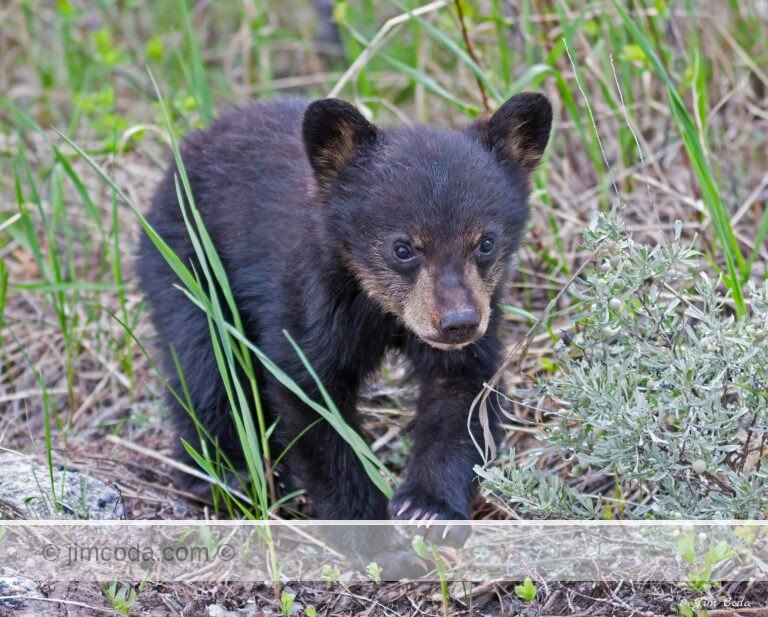
Finally, I’d like some consideration given to bringing in a few black bears to the Seashore. NPS’s list of current Seashore mammals includes black bears which have made some recent visits to the Seashore and other areas of Marin as well. While not known to prey on adult elk, they do in fact prey on elk calves and there needs to be some check on elk populations for their own good. Black bears exist in moderate numbers in neighboring Sonoma County and significant numbers in the next county to the north, Mendocino County.

This photo, along with all others now on my new website, is available to purchase as a high quality fine art print to hang on your home or office wall.